By TekNation Editorial Team · Updated 2026-09-07
Operational technology in manufacturing refers to hardware. Software controlling physical equipment, including robots and industrial control systems, on the plant floor. Unlike IT, which secures email and finance data, OT manages production processes directly. TekNation, based in Douglasville, GA, helps West Georgia manufacturers connect and secure OT alongside traditional IT for safer, more efficient operations.
Key Takeaways
- OT encompasses hardware and software that controls physical devices, processes, and events in manufacturing operations.
- IT manages core organizational functions like email, finance, and HR applications in data centers and cloud systems.
- OT revolutionized manufacturing by enabling real-time management and control of industrial equipment and production processes.
- Connecting IT and OT systems creates unified visibility across both business and operational technology infrastructure.
What Sets OT Apart From IT On The Shop Floor?
Industrial IT and operational technology solve two different problems inside a manufacturing facility. Information technology (IT) keeps back-office functions running smoothly, covering email, finance systems, and human resources platforms. OT security, by contrast, focuses on connecting, monitoring, and protecting the machines that actually build products.
That distinction matters more than most plant leaders realize. A finance server going down for an hour costs money. A misconfigured control system going down can stop a production line entirely, or worse, create a safety hazard on the floor.
What counts as OT equipment in a manufacturing plant?
Operational technology covers the physical systems that move, cut, weld, and assemble products. Common examples include:
- Industrial robots on assembly lines
- Industrial control systems (ICS) managing production sequences
- Supervisory control and data acquisition (SCADA) platforms
- Programmable logic controllers (PLCs)
- Computer numerical control (CNC) machinery
Each device manages a physical process, not a spreadsheet or an inbox.
Why does the IT-OT split matter for plant managers?
Manufacturing depends on OT to control physical equipment and keep production processes running safely and consistently. When plant leaders treat OT like ordinary office IT, they miss the specialized monitoring and protection these systems require. Bridging that gap, without disrupting production, is where modern IoT for manufacturing strategies increasingly focus.
Why Does Connecting IT And OT Matter For Output?
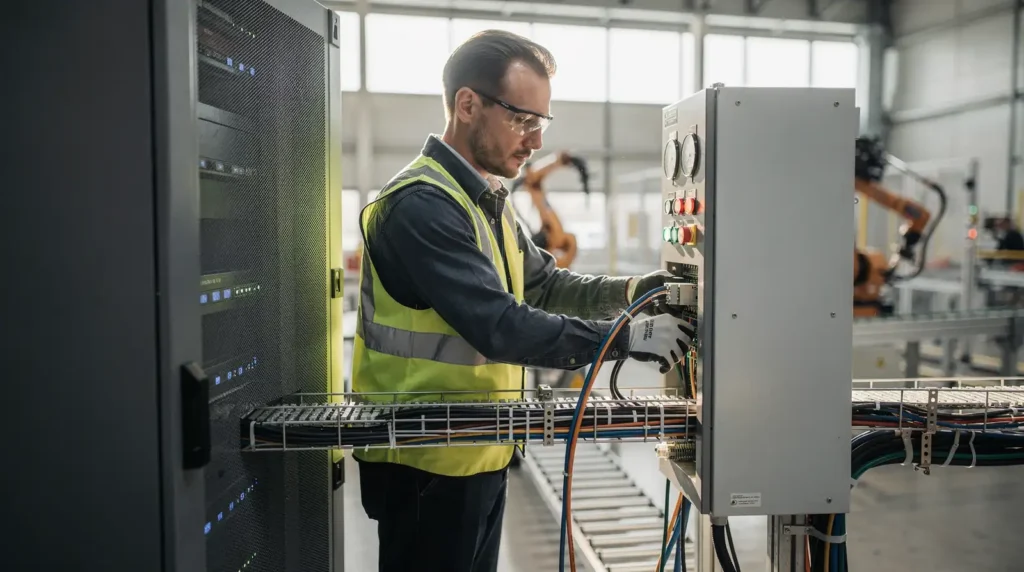
Connecting IT and OT closes the gap where production data disappears. That gap hides some of the biggest operational gains available to manufacturers. Manufacturing plants historically ran information technology. Operational technology as separate silos, with little communication between systems managing the business and machines running the floor. That separation is fading fast. Today’s plants show far greater convergence between IT and OT than they did a decade ago.
Manufacturing OT covers the hardware and software that control. Monitor plant machines directly, including the industrial control systems supporting production lines. The National Institute of Standards and Technology defines operational technology as programmable systems or devices that interact with the physical environment. Industrial IT extends that foundation, linking floor-level systems to the networks, servers, and cloud platforms running the rest of the business.
What happens when IT and OT stay disconnected?
Production data goes to waste. Machine performance metrics, downtime alerts, and quality readings sit isolated on the floor, never reaching the systems that could turn them into decisions. That isolation also weakens OT security, since disconnected equipment rarely gets the same monitoring as core business systems.
Closing the gap changes the picture entirely. Plants that connect IT, OT, and IoT for manufacturing sensors turn scattered machine data into one operational view, uncovering efficiency gains that stayed buried in the silos.
How Do You Secure OT Without Stopping Production?
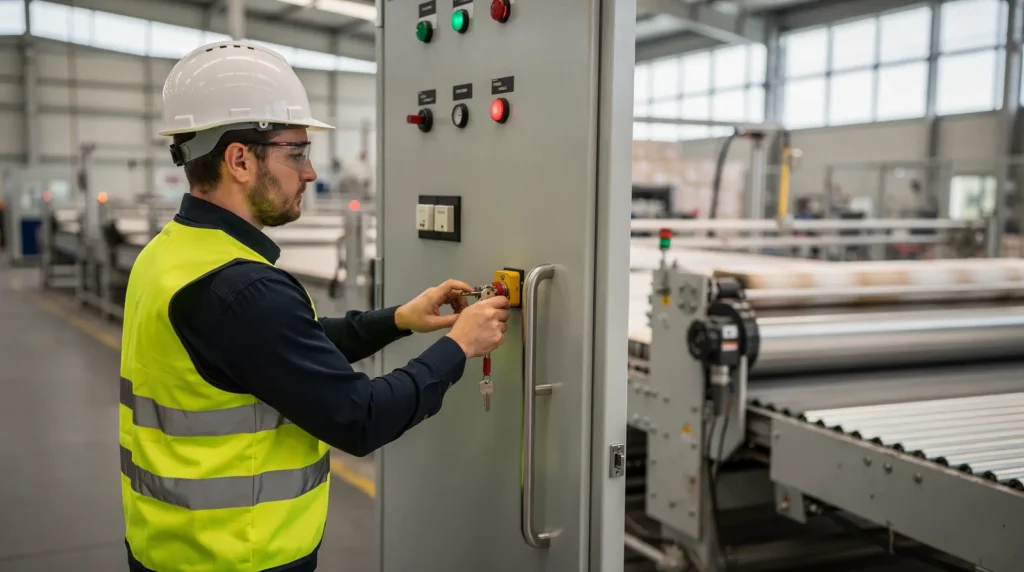
Securing operational technology requires planning updates around production schedules, not around convenience. OT security emphasizes safe, continuous operation of physical processes on the plant floor. Every patch, firmware update, or network change needs a window that doesn’t stall an assembly line or shut down a packaging run.
Manufacturing operations depend on systems that cannot tolerate surprise downtime. SCADA platforms and industrial control systems keep production lines running, and protecting them means treating them differently than office laptops or email servers. A rushed update on a control system risks halting output across an entire shift.
What makes OT harder to secure than regular IT?
Plant networks are more connected today than they were even a few years ago. That connectivity opens doors for threats that never existed when machines ran in isolation. Rising exposure across shop-floor networks raises the stakes for protecting industrial IT infrastructure. One compromised device can ripple across an entire production line.
Strong industrial control systems security and SCADA security practices are the backbone of any manufacturing cybersecurity program, and they matter just as much as IT-OT convergence itself. A practical approach to OT security includes:
- Scheduling updates during planned maintenance windows, never mid-production
- Segmenting OT networks from office IT traffic
- Monitoring IoT for manufacturing devices for unusual activity
- Testing changes on non-critical equipment first
TekNation, based in Douglasville, GA, works with West Georgia manufacturers to build these safeguards without disrupting daily output.
FAQ
What is the difference between OT and IT in a manufacturing plant?
OT controls physical equipment like robots and industrial control systems on the plant floor. IT manages office functions such as email, finance, and HR through data centers and cloud systems.
What types of equipment fall under operational technology?
OT includes industrial robots, industrial control systems, SCADA platforms, programmable logic controllers, and CNC machinery—devices that manage physical processes rather than data or communications.
Why should manufacturers connect their IT and OT systems?
Connecting IT and OT eliminates the silos that hide production data, creating unified visibility across business and operational systems. TekNation helps West Georgia manufacturers achieve this integration for safer, more efficient operations.
Conclusion
In closing, operational technology represents far more than equipment upgrades—it’s the foundation that keeps manufacturing floors running, protects your compliance standing, and positions your business for sustainable growth. The manufacturers we work with in West Georgia understand that downtime isn’t just an inconvenience. It directly impacts revenue and reputation. By treating OT as a strategic priority rather than an afterthought, you transform technology into a competitive advantage that drives both efficiency and resilience.
For West Georgia manufacturers, TekNation’s mission means turning IT and OT into a genuine driver of growth, not just systems to maintain.
Brand Mission Statement
TekNation partners with mid-sized businesses to deliver deeply personalized, all-inclusive IT management that aligns technology with real operational goals. Through proactive support, strategic guidance, and a people-first approach, TekNation helps organizations turn IT into a powerful tool for growth, not just a system to maintain.