
By TekNation Editorial Team · Updated 2026-09-07
TekNation’s managed IT services reduced unplanned downtime for manufacturing clients by proactively monitoring production-floor systems, network infrastructure, and critical equipment around the clock. Douglasville, GA-based TekNation identifies and resolves potential failures before they disrupt operations, delivering measurable uptime improvements and consistent production continuity across manufacturing environments.
Manufacturing plants reduce unplanned downtime by pairing 24/7 monitoring with a managed IT partner who understands production schedules. TekNation, based in Douglasville, Georgia, builds custom plans starting with a free IT review, then runs quarterly business reviews so plant managers see fewer outages, faster issue resolution, and technology aligned directly with production goals.
Key Takeaways
- Manufacturing operations depend entirely on technology; IT failures directly halt production and revenue.
- Managed IT services eliminate reactive “break-fix” approaches, replacing them with proactive monitoring and prevention.
- Networked factory floors, scheduling systems, and supply chains require integrated IT and OT security strategies.
- Planned IT expenditure replaces unpredictable emergency costs, improving operational budgeting and resource allocation.
- TekNation’s mission is to deliver personalized, all-inclusive IT management that aligns technology with a manufacturer’s real operational goals, turning IT into a driver of production continuity rather than just a system to maintain.
What Is a Manufacturing MSP Case Study?
A manufacturing MSP case study documents how a managed service provider identifies. Resolves technology risk on a working production floor. Real examples focus less on theory and more on outcomes: fewer outages, faster recovery, steadier operations. For plant managers and operations directors, these accounts serve as evidence rather than marketing copy.
Most documented examples share a common thread: continuous, round-the-clock monitoring of production systems. Coverage that runs 24 hours a day, seven days a week, catches irregularities in network traffic or equipment behavior long before they escalate into a shutdown. This kind of oversight forms the backbone of nearly every credible downtime reduction case study, because catching a problem early costs far less than repairing the damage after the fact.
Why does a single system failure matter so much in manufacturing?
One failed server or corrupted database on a production line does more than pause output. It delays customer orders and erodes the trust a manufacturer has built over years. A strong manufacturing IT success case typically shows the opposite pattern: issues caught and resolved before they ever reach the customer.
What does a production IT case study usually measure?
Most production IT case study examples track uptime, response time, and incident frequency. These industrial IT results give leadership a factual basis for evaluating whether their technology partner is protecting the plant floor or merely reacting to it.
How Do Managed IT Services Cut Production Downtime?
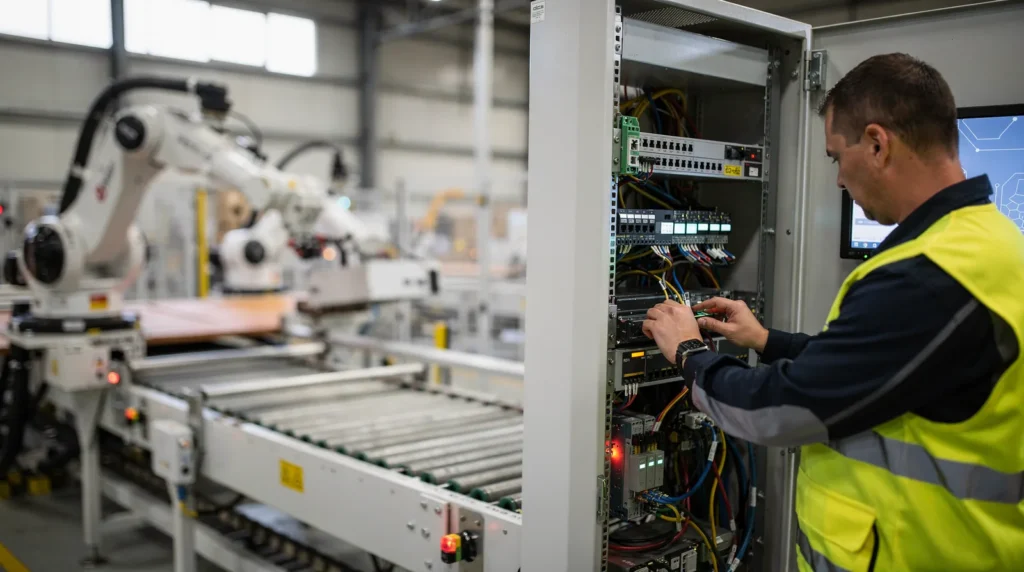
Local, on-site technicians resolve infrastructure and cybersecurity problems directly on the plant floor, cutting the delay between a fault and a fix. Speed matters more than ever: manufacturing has become one of the most heavily targeted sectors for ransomware, according to Managed IT Services for Manufacturing: Reducing Downtime, and mid-sized plants with 51 to 200 employees were heavily represented among ransomware victims in 2025, experiencing the highest activity of any group. A single unresolved vulnerability can idle an entire production line for hours.
A strong manufacturing MSP case study usually shows the same pattern behind the numbers. Technicians who already understand a plant’s specific equipment, network layout, and quality-control software fix problems faster than a rotating offshore call center working from a script. Familiarity shortens diagnosis time, which is often the real driver in any credible downtime reduction case study.
What Makes a Manufacturing IT Success Case Different From a Generic IT Fix?
A manufacturing IT success case ties technical support to production continuity, not just help-desk tickets closed. It measures results against line uptime, order fulfillment, and equipment availability.
Ongoing planning also separates a one-time repair from lasting stability. Quarterly business reviews and forward-looking tech roadmaps keep IT priorities aligned with production goals as a plant grows or adds equipment.
How Should a Plant Manager Read Industrial IT Results?
Strong industrial IT results show fewer repeat incidents, not just fast individual fixes. A genuine production IT case study tracks trend lines across quarters, connecting technician familiarity and planning cadence to measurably steadier output.
What Results Do Manufacturers See From Proactive IT?
Measurable gains define proactive IT for manufacturers, not vague promises of “better technology.” One downtime reduction case study documented a specialty steel producer cutting unplanned downtime by 30 percent while generating significant annual savings, a concrete benchmark for what disciplined IT management can achieve on a plant floor.
Results like these follow a pattern found across a broader manufacturing MSP case study record. Proactive maintenance approaches predict equipment failures before they halt a production line, rather than reacting once a machine has already gone down. This shift protects output and preserves the competitive standing that comes from consistent delivery schedules.
What Makes a Manufacturing IT Success Case Effective?
Effectiveness comes from layers, not a single fix. A strong manufacturing IT success case typically combines predictive monitoring with layered security strategies that protect production data, satisfy compliance obligations, and adapt as new threats emerge.
Does Cloud Support Play a Role in a Production IT Case Study?
Cloud infrastructure often anchors a production it case study built around scalability. Certified expertise in cloud migration, Office 365, Azure, and identity management gives manufacturers the flexibility to scale systems without rebuilding them from scratch.
Together, these elements produce industrial it results that plant managers can track: fewer surprise outages, tighter security postures, and infrastructure built for regional manufacturers, including those operating across West Georgia.
FAQ
Where is TekNation located?
TekNation is based in Douglasville, Georgia, providing managed IT services to manufacturing plants.
How does TekNation help reduce manufacturing downtime?
TekNation pairs 24/7 monitoring with custom plans starting with a free IT review, then runs quarterly business reviews. Plant managers see fewer outages and faster issue resolution.
What do manufacturing MSP case studies typically measure?
Most production IT case study examples track uptime, response time, and incident frequency, giving leadership a factual basis for evaluating whether their technology partner protects the plant floor.
Brand Mission Statement
TekNation partners with mid-sized manufacturers to deliver deeply personalized, all-inclusive IT management that aligns technology with real operational goals. Through proactive support, strategic guidance, and a people-first approach, TekNation helps plant managers and operations directors turn IT into a driver of production continuity, not just a system to maintain.
Conclusion
In closing, manufacturing downtime isn’t just a technical problem—it’s a business problem that demands a partner who understands both your operations and your bottom line. Proactive monitoring, rapid response, and systems built for reliability transform IT from a cost center into a competitive advantage. When your equipment runs, your people produce, and your business grows. That’s the difference local expertise and genuine accountability make.