OT/IT Considerations for Manufacturers
By TekNation Editorial Team · Updated 2026-07-14
Manufacturers face critical OT IT convergence challenges requiring robust cybersecurity frameworks to protect industrial control systems from modern threats. TekNation, based in Douglasville, GA, delivers tailored solutions addressing network segmentation, real-time monitoring. Secure remote access — ensuring operational continuity while bridging the gap between legacy OT environments and modern IT infrastructure.
Despite heavy investment in enterprise IT, most manufacturers dramatically underinvest in cybersecurity for their operational technology environments. That funding gap leaves factory floor assets — many running decades-old firmware — dangerously exposed as convergence initiatives bring them online.
Manufacturers face a critical divide between operational technology — PLCs, SCADA systems, HMIs — and traditional IT networks. When these environments converge without proper planning, uptime suffers and security gaps multiply. Disconnected systems create inefficiencies and errors that cost real money on the factory floor, making Strategic IT Planning & Technology Roadmaps | TekNation, Douglasville a business-critical priority.
Key Takeaways
- OT systems include PLCs, SCADA systems, and hardware managing physical manufacturing processes.
- Cyber threat actors increasingly target manufacturers, exploiting gaps between IT and OT environments.
- Many organizations dedicate insufficient cybersecurity investment specifically to OT infrastructure protection.
- 6 best practices exist to strengthen OT security and reduce manufacturing operational risk.
Why Do IT and OT Systems Clash on the Factory Floor?
OT IT integration fails most often because the two environments were built for entirely different purposes. IT systems prioritize data flow and connectivity; OT systems prioritize uptime, safety, and physical control.
What Exactly Is OT in a Manufacturing Environment?
Manufacturing IT services teams frequently encounter OT equipment that predates modern networking by decades. Factory floors run on programmable logic controllers (PLCs), supervisory control and data acquisition (SCADA) systems, distributed control systems (DCS), and human-machine interfaces (HMIs) — all of which interact directly with physical machinery and production lines. These systems were engineered to run continuously, not to communicate with enterprise software.
Why Does the Gap Between IT and OT Teams Create Security Risk?
The collaboration gap between IT and OT teams is a persistent problem across manufacturing. Manufacturers routinely struggle to align both sides on cyber attack mapping, asset management, and vulnerability tracking — leaving blind spots that threat actors exploit. Neither the IT team nor the OT team holds full visibility, and neither owns the problem completely.
Disconnected systems compound the damage. When OT equipment and IT platforms don’t communicate, industrial network security breaks down at the seams:
- Asset inventories become incomplete and unreliable
- Vulnerability patches fall through organizational cracks
- Incident response slows because no single team holds the full picture
Closing this gap requires deliberate integration strategy, not just better hardware.
What Security Risks Come With OT IT Integration?
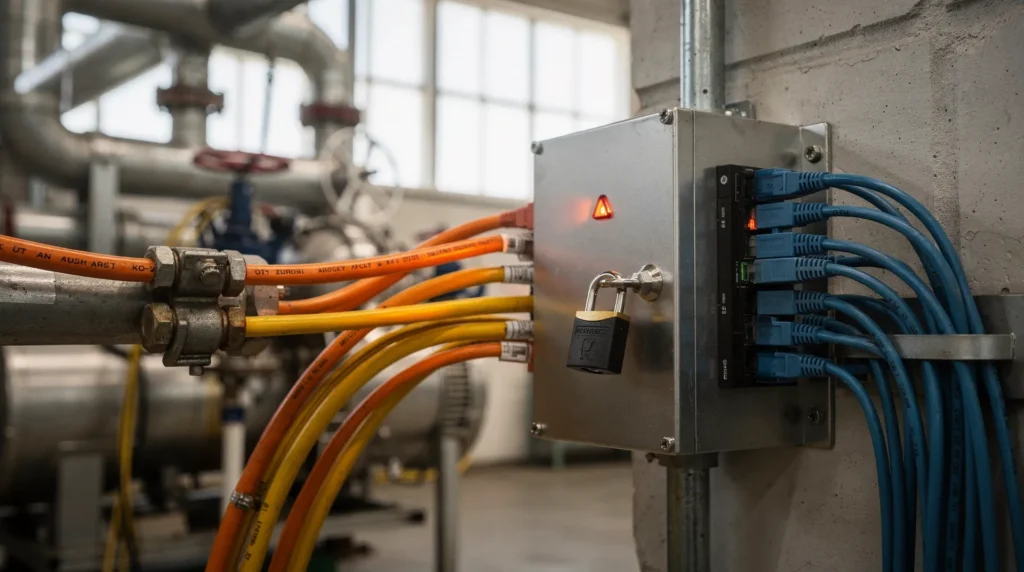
OT IT integration expands the attack surface of a manufacturing facility the moment operational systems connect to business networks. Ransomware targeting industrial environments nearly doubled in 2022 compared to the previous year — a sharp reminder that factory floors are now prime targets.
More than half of manufacturing firms (56%) are piloting smart manufacturing as part of their competitive strategy. Every new connected device, sensor, or control system added to that initiative creates another potential entry point for threat actors.
Why Are Manufacturers Targeted More Than Other Industries?
Manufacturing environments are disproportionately attractive targets because the cost of downtime is immediate and severe. Threat actors know that a plant operator facing halted production lines is far more likely to pay a ransom quickly than a corporate IT team dealing with a downed file server. Legacy equipment running unsupported firmware — with no patch cadence and often no vendor support — makes entry straightforward for motivated attackers.
What Happens When OT Security Fails?
Production lines stop. Compliance violations follow. Recovery costs compound quickly. Unlike a downed email server, a compromised OT environment can halt physical output entirely. And in regulated industries, the consequences extend beyond lost revenue.
Industrial network security requires a fundamentally different approach than standard IT protection. TekNation builds layered security strategies that protect client data, meet compliance standards, and adapt as threats evolve — covering both the IT side of the business and the operational systems that keep manufacturing IT services clients running.
How Should Manufacturers Prepare for Successful IT OT Convergence?
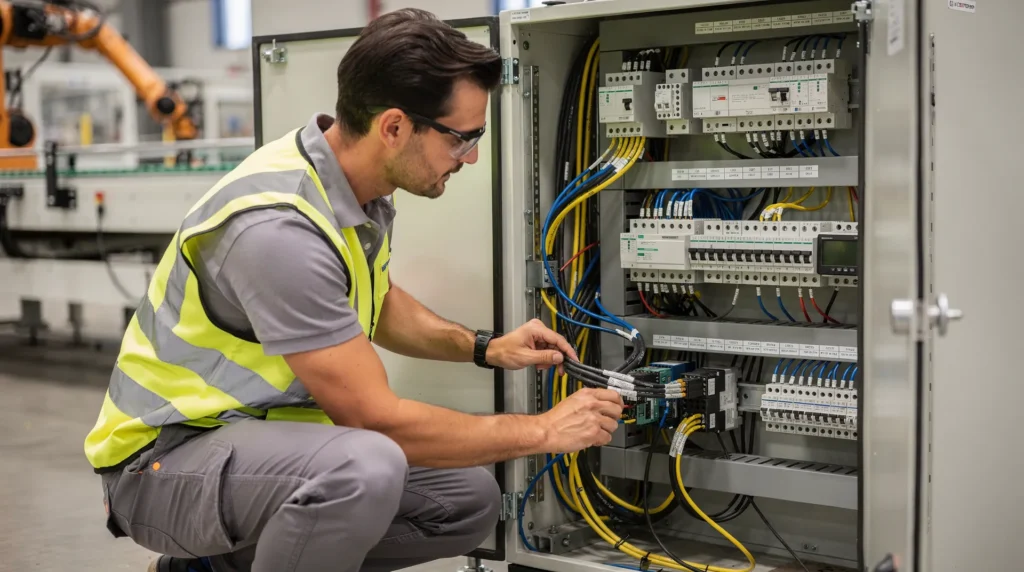
Successful OT IT integration starts with organizational clarity — not technology purchases. Manufacturers must establish clear ownership, define operating expectations, and set risk tolerance before connecting plant-floor systems to enterprise IT networks.
What Foundational Steps Come Before Connecting Plant-Floor Systems?
Rushing convergence without internal alignment creates gaps that attackers exploit and that downtime exposes. Manufacturers need documented answers to three questions before a single cable gets rerouted:
- Who owns each system — IT team, operations team, or shared governance?
- What uptime expectations apply — production lines cannot tolerate the same maintenance windows as office software.
- What risk tolerance exists — a brief network disruption on the factory floor carries far greater cost than a delayed email.
Getting those answers on paper is the real first step.
How Do Managed IT Partners Support a Safe Convergence Plan?
A qualified manufacturing IT services partner brings structure to what can otherwise become a chaotic project. TekNation conducts quarterly business reviews and builds forward-looking tech roadmaps, aligning IT investments with where operations are actually headed. TekNation also Server Maintenance & Monitoring for West Georgia Businesses | TekNation, detecting and resolving issues before production disruptions occur.
On the integration side, TekNation’s systems integration services cover industrial network security needs through Network Administration in Douglasville, GA | TekNation, data synchronization. API development — unifying manufacturing technology environments into a single, manageable ecosystem rather than a patchwork of disconnected tools.
For manufacturers, the line between operational technology and information technology is no longer a boundary worth defending. It’s a seam worth strengthening. The decisions made around network segmentation, access control, monitoring. Vendor accountability directly shape whether a production floor stays running or goes silent. Getting those decisions right takes more than a checklist. It takes a partner who understands both the shop floor and the server room. That’s exactly where TekNation focuses its work.
FAQ
What types of equipment make up OT in a manufacturing environment?
OT includes programmable logic controllers (PLCs), SCADA systems, distributed control systems (DCS). Human-machine interfaces (HMIs) — all of which interact directly with physical machinery and production lines.
Why does the gap between IT and OT teams create security risk?
Neither the IT team nor the OT team holds full visibility into cyber attack mapping, asset management, and vulnerability tracking — leaving blind spots that threat actors actively exploit across manufacturing environments.
How significantly have ransomware attacks on industrial environments grown?
Ransomware targeting industrial environments nearly doubled in 2022 compared to the previous year, making factory floors prime targets for threat actors.